
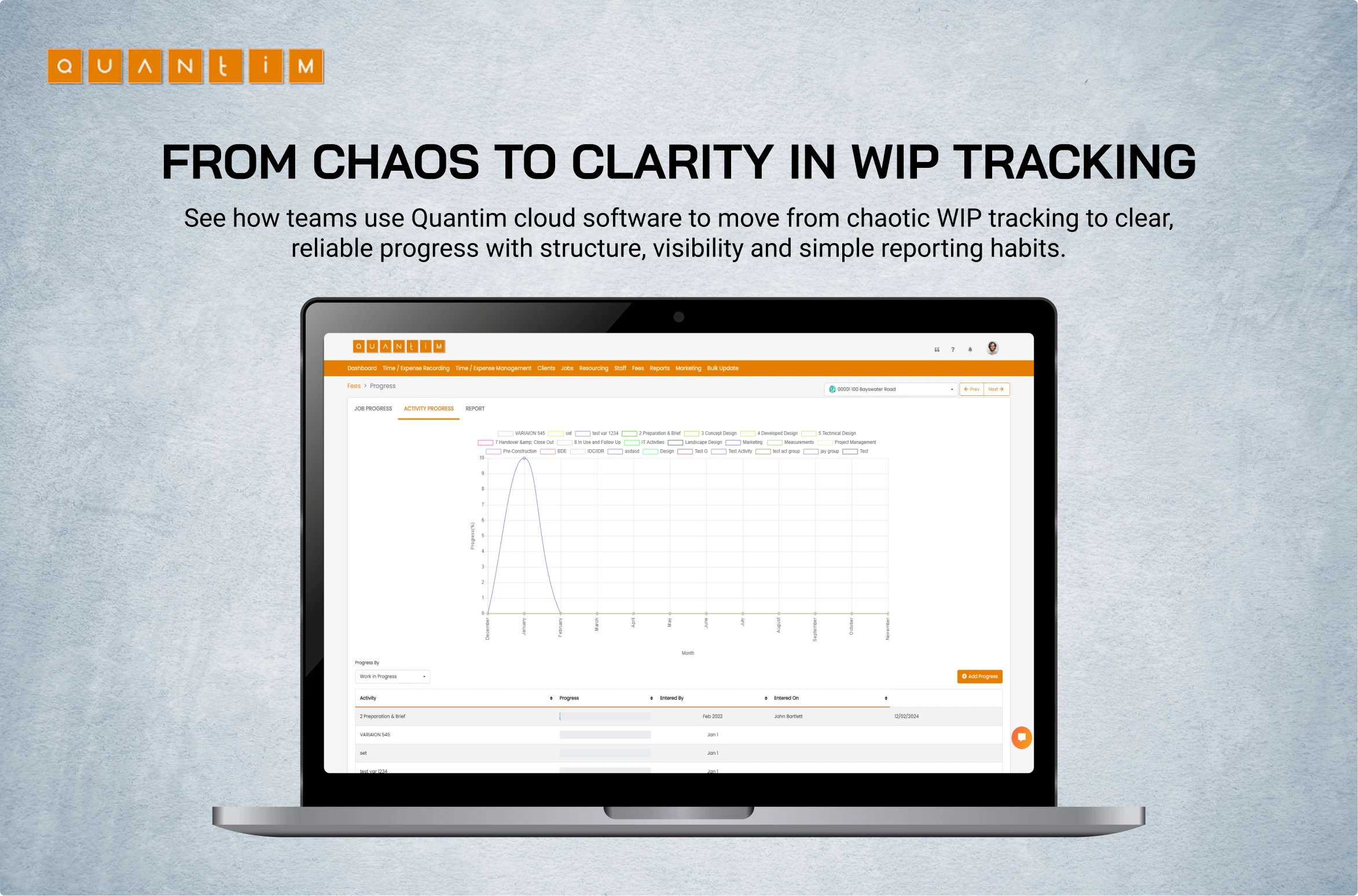
Work in progress tracking should bring order to a project, yet for many teams it becomes a constant source of confusion. When updates arrive late, data is incomplete or information is scattered between different tools, WIP tracking turns into guesswork instead of reliable insight. Leaders are forced to rely on status conversations, gut instinct and meetings rather than clear, current facts about what is actually happening across active jobs.
This shift from clarity to chaos does not happen overnight. It starts with small gaps in communication, fragments of data that never make it into the system and blind spots in how progress is reported. To move from chaos back to clarity, teams need to understand where these blind spots come from and how a structured operational platform can quietly remove them from everyday work.
The Hidden Cost of Blind Spots in WIP Tracking
Behind every delayed project report or stressed status review there is usually the same root problem. The team is working hard, but no one has a single, trusted picture of what is actually in progress and how close each job is to completion. Work looks active in chat tools and meetings, yet the formal WIP data is old, partial or missing. Project managers see activity everywhere but still cannot answer basic questions about progress with confidence.
These blind spots have direct financial consequences. Decisions get made late because risks are not visible early enough. Clients lose confidence when answers keep changing between one review and the next. Finance teams struggle to prepare accurate WIP and revenue reports on time. The result is more time spent chasing updates and less time improving project outcomes. The operational pattern this creates, where teams continue executing without the feedback signals that would allow them to correct course, is described in our article on the blind execution loop that damages project delivery.
The Financial Cost of WIP Chaos
Inaccurate WIP has consequences that extend well beyond reporting inconvenience. When work in progress is overstated, revenue is recognised before it has been earned, producing a financial position that looks stronger than it is and triggering decisions about hiring, investment and client commitments that are based on a misleading picture. When WIP is understated, profitability appears weaker than it is, potentially triggering unnecessary cost-cutting or pricing changes that damage competitiveness.
The WIP accuracy metric sits at the centre of the profitability chain in project-based organisations because it connects what has been delivered to what has been billed, what has been earned to what has been recognised, and what the current financial position actually is versus what the accounts appear to show. The profitability metrics that depend on accurate WIP are examined in our article on the profitability metrics every firm must measure, which explains how WIP inaccuracy propagates forward into fee recovery rates, forecasting reliability and overall margin performance.
Manual WIP Tracking vs Modern WIP Management
In the traditional approach to WIP tracking, teams relied on spreadsheets, long email threads and manual status meetings. Updates were typed into Excel at the end of the week, often from notes or memory. If someone forgot to update a cell or used a different version of the file, the whole report became unreliable. This approach made it easy for errors and missing entries to hide inside the file until someone caught them during a stressful review.
Modern project environments move too fast for this approach. Projects run across multiple locations, flexible working hours and many digital tools. WIP needs to be visible in real time, not in a spreadsheet that someone updates when they have a spare moment. Cloud-based WIP tracking software gives everyone access to the same live view of jobs, activities, hours and costs. Quantim is designed around this operational reality, providing a single, always-current WIP workspace that replaces manual consolidation and version chasing with structured, automatically updated data.
Blind Spots Hidden in Everyday Communication
1. Busy Channels, but No Structured Progress
In many teams, most progress discussion happens in chat applications, group messages and informal calls. People send quick updates such as "almost done" or "working on it" without linking these messages to a specific activity or job. Important details are scattered across different conversations, and by the time someone prepares a WIP report they have to scroll back through days of messages to reconstruct what really happened. Communication noise hides the signal the team actually needs, and the effort required to extract that signal from informal channels discourages the regular review habits that WIP accuracy depends on.
Quantim addresses this by giving every job and activity a structured place for progress updates where hours, status and notes are captured in context. Instead of living only in chat, updates are entered directly against the work item so that WIP views and reports always reflect the latest information without manual reconstruction.
2. Status Meetings That Never Become Data
Another common blind spot appears when most detail is shared verbally in recurring meetings. Team members explain progress, blockers and remaining effort on a call, everyone acknowledges the update, and then the meeting ends without those updates being captured in the system. If someone is absent or a manager checks the WIP later in the week, the data tells a different story from what was discussed. Over time, this gap between spoken status and recorded status undermines trust in WIP tracking and forces managers to attend every meeting to maintain an accurate picture that should be available without their presence.
With Quantim, meeting outcomes translate directly into updated WIP data. Project managers can open the relevant job or activity during the call and record progress, remaining effort and notes on the spot, making the system the shared memory of the meeting. Anyone who checks WIP after the call sees the same facts that were agreed in the discussion.
3. Optimistic Language That Hides Aging WIP
Project teams are often naturally optimistic in how they describe progress. Tasks are described as "almost done" for several days running, even when the work is still less than halfway complete. Without tools that surface aging WIP clearly, these items can sit in the system for weeks without receiving the attention their stall warrants. Leaders hear positive updates while the age and size of the open work quietly grows in the background.
The distinction between genuine progress and optimistic language is exactly what evidence-based progress measurement is designed to expose. Our article on how to measure progress that truly matters explains why percentage-complete estimates are insufficient measures of project health and what verifiable progress indicators look like in practice. Quantim helps teams confront this reality by showing how long each job or activity has been at its current stage and how much effort is already logged, making it straightforward to challenge vague language and replace it with concrete updates.
4. The "No News Is Good News" Gap
When teams are under pressure, they sometimes fall into a pattern where they speak up only when something is urgent or blocked. The absence of updates is treated as a sign that everything is progressing as planned. In reality, silence can hide slow-moving risks, unreported scope changes and small delays that individually seem insignificant but collectively compound into a serious delivery problem by the time they surface.
Quantim closes this blind spot by supporting structured update rules and automated reminders that convert silence into an actionable signal. When no update is provided for an active job within a defined period, the job is flagged in the WIP view, prompting the responsible person to record progress. The mid-project disciplines that systematically surface these silent risks before they compound are covered in our article on mid-project reviews that actually work.
5. Feedback That Is Collected but Never Connected
Some organisations already collect feedback through start, mid and end-of-project questionnaires. The problem is that these responses are stored in separate survey tools or shared folders and are never linked to WIP. Lessons learned stay trapped in documents rather than influencing everyday progress decisions. Valuable comments about communication, scope clarity and coordination are read once and then forgotten before the next project starts, which means the same problems that generated the feedback recur on the following engagement.
Quantim allows teams to connect feedback directly to jobs and activities, so comments about communication gaps or reporting friction sit alongside progress data rather than in a separate system. Over time, patterns emerge that highlight where update rules need adjustment or where training and templates can remove recurring problems, and the WIP practices that result keep improving with every project cycle.
What Clarity in WIP Tracking Looks Like
When WIP tracking is clear, leaders can open a single view and immediately understand what is in progress, how far each job has moved and where attention is needed without assembling information from multiple sources or chasing updates from multiple people. Reliable data supports realistic scheduling because early signs of delay stand out instead of hiding behind optimistic status messages. Teams can adjust resources or priorities confidently, knowing that the figures they see are grounded in actual time and cost entries rather than assumptions.
Clarity also changes the character of financial reporting. Instead of rushing to assemble numbers before every review, teams generate WIP and financial reports quickly from the same structured data used to manage work every day. This consistency accelerates month-end processes and gives finance teams a stronger basis for revenue recognition, forecasting and margin analysis. The dashboards that surface this level of WIP clarity alongside utilisation, billing and project performance are covered in our article on what high-performance project dashboards must include.
How Quantim Cloud Software Turns WIP Chaos into Clarity
Quantim offers a dedicated work in progress area designed for engineering, construction, consulting and other project-based teams. Jobs and activities are tracked in a structured way, with options to view progress by fee quote, resourcing or WIP at both job level and activity level. Each update records hours, costs and narrative in context, so nothing important is left trapped in chat threads or meeting notes. A built-in WIP report view brings together job progress, activity status and financial performance in one place, filterable by client, project type, department or time period.
Quantim also supports the automation that reduces manual administration: teams can configure update rules and reminders, integrated timesheets and resource planning feed directly into WIP, and hours and utilisation are reflected automatically rather than entered retrospectively. For a full picture of how WIP tracking connects to the broader project financial lifecycle, our article on end-to-end tracking software for modern organisations covers how WIP sits within a connected system where time, cost, progress and billing all draw from the same live data set.
Bringing Continuous Feedback into WIP Conversations
Feedback is most powerful when it is regular, short and connected to real work rather than collected as a formality at project end. Three lightweight check-in points create a continuous feedback loop: at project start, a short questionnaire captures expectations, risks and communication preferences; midway through, a quick survey surfaces whether updates are clear and whether deadlines still feel realistic; at project end, a final form reflects on what worked well and what should change next time.
When this feedback is linked to actual WIP data in Quantim, patterns emerge across projects that highlight where update rules need adjustment, where coordination is consistently generating rework and where communication practices are creating the blind spots that this article describes. WIP practices do not stay fixed but keep improving with every project cycle, and the improvement is grounded in evidence from actual delivery rather than opinions from post-project retrospectives.
Practical Steps to Move from Confusion to Clarity
Moving from chaotic WIP tracking to a controlled approach does not require a large-scale transformation programme. Teams can start by choosing a single source of truth for WIP and committing to use it consistently across every active job. Next, they define clear, simple rules for how and when updates are recorded so that the standard is explicit rather than assumed. Then they gradually integrate automation and feedback, using reminders and structured questionnaires to keep information flowing without adding administrative overhead.
Quantim is designed to support this journey incrementally. The system can start simply as a central place to record job and activity progress and expand to include structured WIP reporting, timesheets, resourcing, feedback and analytics as the team's habits mature. The daily disciplines that sustain this kind of structured visibility over time are set out in our daily tracking framework for high-performing teams. Each improvement increases visibility, reduces blind spots and makes WIP conversations more factual and less stressful for everyone involved.
Conclusion
Clarity in WIP tracking is not about having more conversations about progress. It is about turning those conversations into structured, reliable data that everyone can trust. When blind spots hide inside chat threads, meeting memories and fragmented tools, projects slow down, risks stay invisible for too long and reporting becomes a last-minute scramble. When WIP is centralised, structured and supported by continuous feedback, teams regain control over progress and can focus on delivering better outcomes for clients.
If your team is ready to replace uncertainty with a clear, shared view of progress, Quantim provides a practical path from chaos to clarity in WIP tracking while keeping the process human and the feedback continuous. Contact us at info@quantim.co.uk or book a demonstration below.