
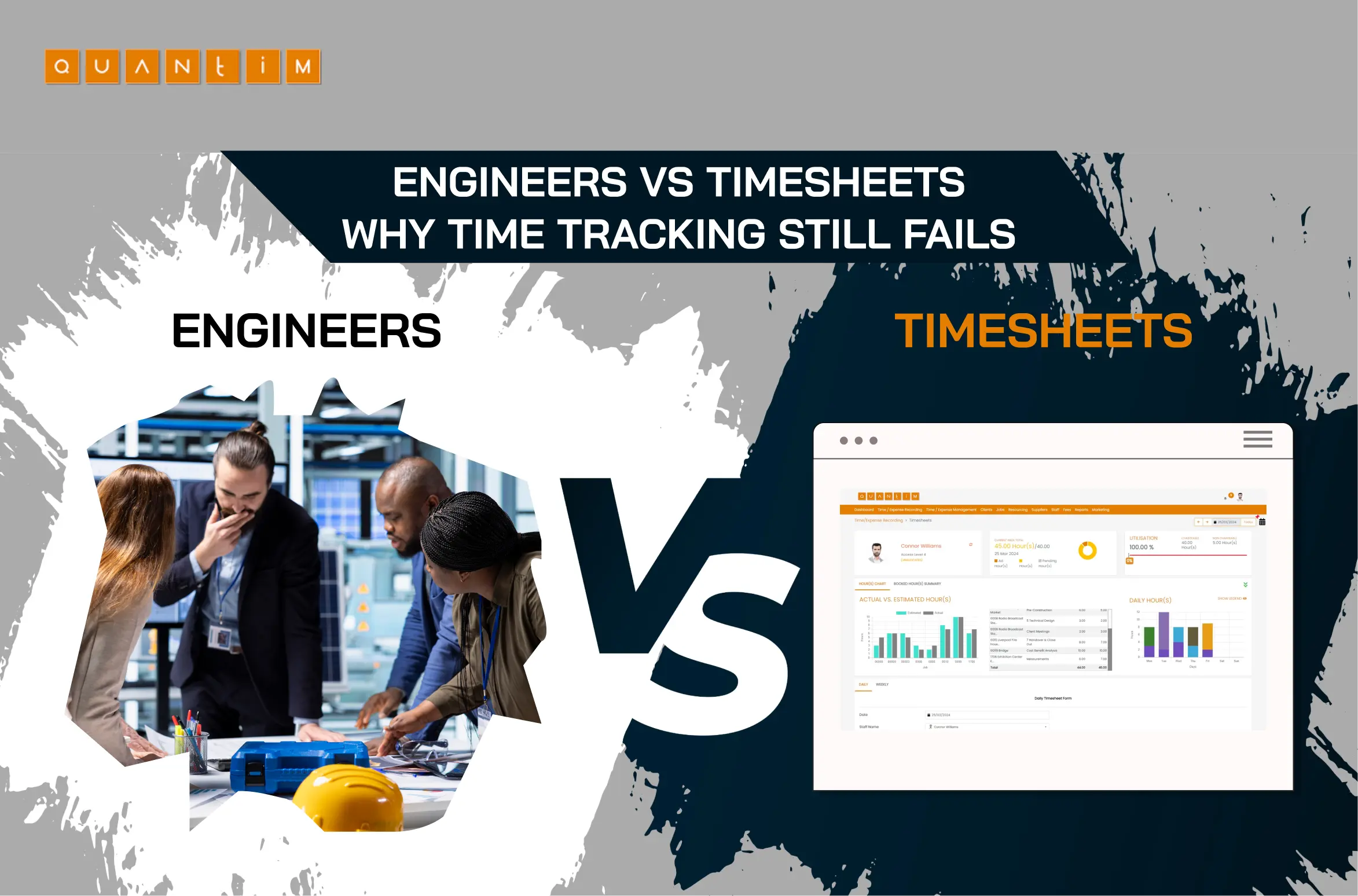
Time tracking should be simple. Engineers complete their work, log the hours and the organisation gains visibility of cost, productivity and project performance. Yet in practice, time tracking is one of the most inconsistent and frustrating habits in engineering teams.
Most firms chase timesheets every week. Managers send reminders. Finance teams collect incomplete entries. Leaders worry about accuracy. Engineers see it as admin, not as part of the work. This breakdown is so common that it causes significant financial and operational blind spots.
This article explains why time tracking fails in engineering teams, why traditional systems do not fix the problem and how the right structure creates discipline without increasing admin burdens.
1. Engineers See Timesheets as Admin, Not as Value
Engineering work is technical, creative and problem solving driven. Timesheets feel like a task that sits outside the real work. When engineers do not understand how timesheets influence:
- project profitability
- staffing decisions
- budgeting
- forecasting
- client reporting
they naturally deprioritise them. The core issue is not unwillingness. It is the lack of alignment between operational needs and what engineers believe their role should include.
2. Time Is Logged Late, Guesswork Replaces Accuracy
Most engineers submit time only when:
- reminders appear
- payroll deadlines approach
- managers escalate
- financial month end is near
Late time entry forces people to guess. Guesswork leads to:
- inaccurate activity allocation
- hidden rework
- incorrect job costing
- unreliable utilisation data
- weak forecasting
The business pays the price without realising it.
3. Legacy Systems Make Time Tracking Difficult
Many engineering firms still rely on:
- spreadsheets
- shared folders
- outdated ERP screens
- rigid desktop tools
- timesheet forms with too many steps
When the system is slow or difficult to use, teams avoid it. Engineers will always choose engineering work over admin. A tool must support their workflow, not interrupt it.
4. Activity Structures Are Confusing
Engineers often see long lists of activities, phases or codes they do not understand. This leads to:
- random category selection
- inconsistent job coding
- misreported work
- incorrect job analysis
- confusion during billing
When activity structures are poorly designed, data quality collapses.
5. Managers Do Not Have Real Time Visibility
When time tracking is inconsistent, managers operate blindly:
- They cannot see daily progress
- They cannot adjust workloads
- They cannot intervene early
- They cannot spot inefficiencies
- They cannot maintain realistic deadlines
By the time they see the deviation, it is too late to fix it.
6. Engineers Avoid Systems That Do Not Reflect Real Work
Many timesheet tools are generic and do not match the rhythm of engineering work where tasks shift daily and unexpected issues appear. Engineers feel the system does not represent reality and therefore do not trust it.
To gain adoption, a system must:
- reflect job activities clearly
- allow fast daily entry
- support rework, variations and field changes
- sync with WIP, forecasting and job progress
Without this alignment, adoption remains low.
7. No Connection Between Timesheets and Outcomes
If engineers cannot see how their time affects:
- project profit
- resource planning
- forecasting
- client expectations
- workload balance
they do not take ownership. Engineers must see the purpose to invest in the habit.
How Quantim Solves Time Tracking Failure
Quantim is built to solve the behavioural, structural and operational barriers behind timesheet accuracy. Instead of forcing engineers to adapt to the system, Quantim adapts to the way engineering teams work.
Here is how Quantim strengthens time tracking discipline naturally, without extra admin.
1. Rapid, Daily Entry Designed for Engineers
Quantim’s interface is clean, fast and activity focused. Engineers can:
- enter time in seconds
- select job activities that make sense
- avoid long or confusing lists
- update time daily with minimal friction
The system supports the rhythm of engineering work.
2. Real Time Progress Visible on Dashboards
Engineers see how their contributions affect:
- project timeline
- job progress
- utilisation
- upcoming workload
- team performance
Visibility creates ownership.
3. Automatic Validation and Smart Rules
Quantim prevents inaccurate entries without interrupting engineers:
- warns if hours exceed capacity
- flags missing activities
- ensures job and activity selection is correct
- highlights inconsistent behaviour
The system enforces accuracy without forcing manual checks.
4. Activity Structures Built for Engineering Workflows
Quantim supports job activities such as:
- design
- modelling
- calculations
- reviews
- site visits
- meetings
- variations
- rework
Engineers no longer guess where their time should go.
5. Managers Gain Live Performance Data
With real time visibility, managers can:
- adjust workloads
- catch early project drift
- improve forecasting
- support staff
- allocate resources better
- protect project margins
No waiting for weekly or monthly reports.
6. Integrated Approvals Keep Data Clean
Approvals ensure:
- incorrect entries are corrected immediately
- engineering managers maintain control
- project costing remains accurate
- WIP and forecasting stay reliable
Approvals are quick and visible in one dashboard.
7. Connected to Costing, Forecasting and Resource Planning
The biggest advantage is integration. Timesheets automatically feed:
- Job Activity Analysis
- Job Cost Summary
- Actual vs Estimate
- Forecast to Complete
- Resource Utilisation
- WIP
- Fees and billing readiness
Accuracy increases because data is used immediately and visibly.
Conclusion
Engineers do not fail at timesheets because they lack discipline. They fail because traditional systems do not respect the way engineers work. When time tracking is difficult, unclear or disconnected from outcomes, engineers disengage.
Quantim removes these barriers. It turns time tracking into a simple, meaningful, structured habit that supports accurate costing, better forecasting, stronger resource planning and healthier project margins.
If your engineering team struggles with timesheet accuracy or consistency, our team can help you establish a more reliable and user friendly approach. Contact us at info@quantim.co.uk.